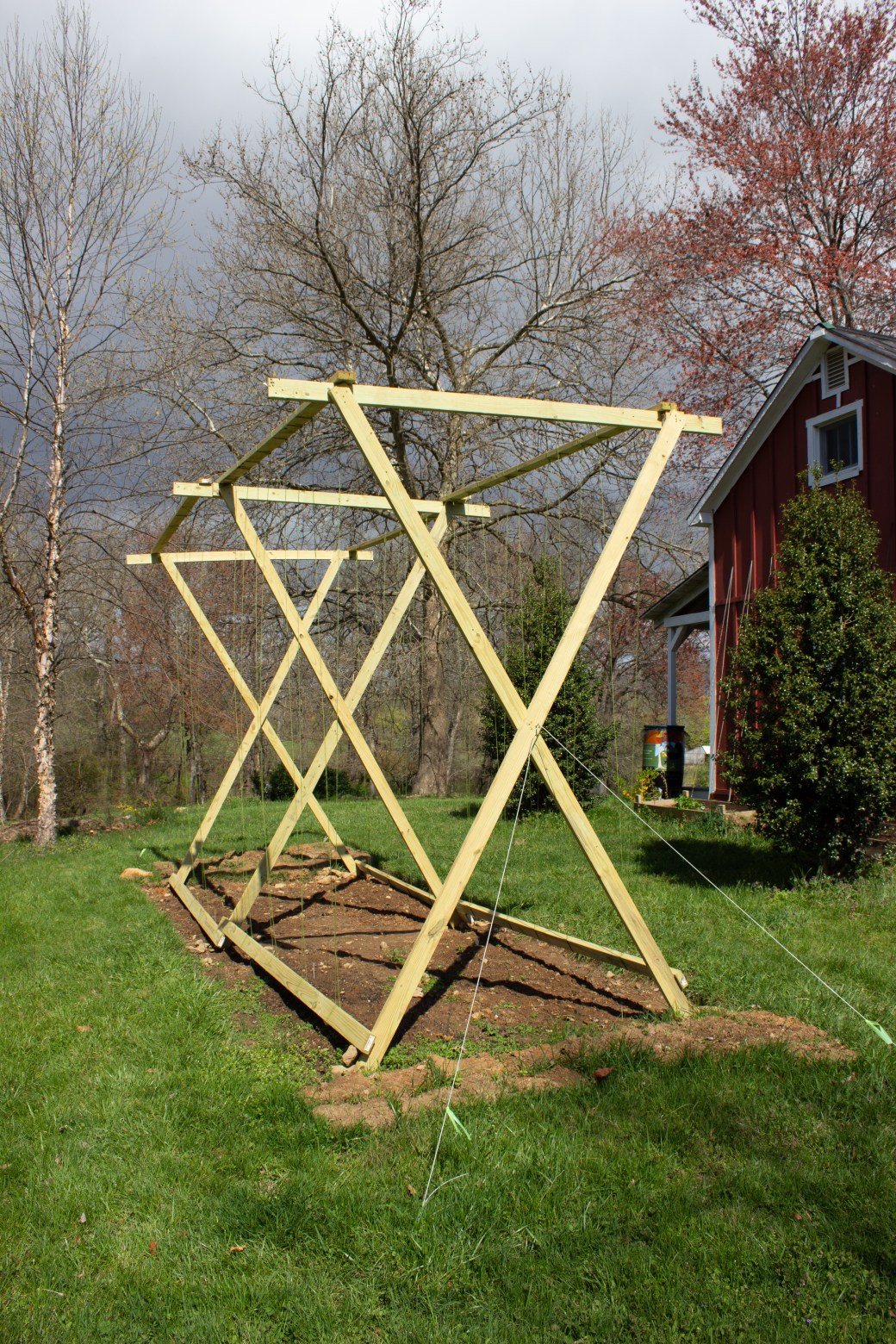
 We’re significantly expanding our attempted hops production this year. We’re now trying four different varieties: Nugget, Willamette, Cascade, and Kent Goldings. The Nugget and Willamette have been going for several years, and the Nugget is clearly happier with our climate and soil conditions. Every year, it’s roots have busted out of the raised bed (literally pushing the boards apart) and I’ve had to pull out a sackful of extra rhizomes. The Willamette seems to be hanging in there, but hasn’t produced much yet. The Kent Goldings went in last year next to the cabin, sent up a few bines (this isn’t a typo, hops have “bines,” not vines), but didn’t produce. The Cascade, purchased as potted plants rather than rhizomes, is new this year. So far, it looks a little sad.
According to the books, Nugget is “quite heavy and herbal” with alpha acids ranging from 11-14.5%, and is supposedly best for “light lagers” (which I don’t brew very much). Willamette is described as “mild and pleasant, slightly spicy, fruity, floral a little earthy” with alpha acids from 3.5-6% and good for English-style ales, porters and stouts. Kent Goldings are described as “gentle, fragrant and pleasant” with low alpha acids (4-5.5%) and good for all English ales. Cascade is “pleasant, flowery, spicy and citrusy” with alpha acids of 4.5-7% and good for IPAs. We’ll see how much any of this matters. Maybe I’ll be brewing more “light lagers.”
We’re working with three types of trellises now. The original, supporting both Nugget and Willamette, is in Ft. Knox and attached to the big 6×6″ fence posts. Last year, we opened a new bed with trellis strings connected to the south wall of the cabin (see below). We have Willamette in that bed this year.
The new monster trellis we set up a couple of weeks ago is made of crossed 2x4s with twine connecting cross pieces at the top and bottom (featured at the top of this post). The wood frame is anchored to the ground with three foot stakes and 3/8″ steel cable. It was a bear to set up and I got a good knock on the head when the first section collapsed before everything was attached. Definitely a multi-person job. Anne and I did it with the help of one of our young neighbors.
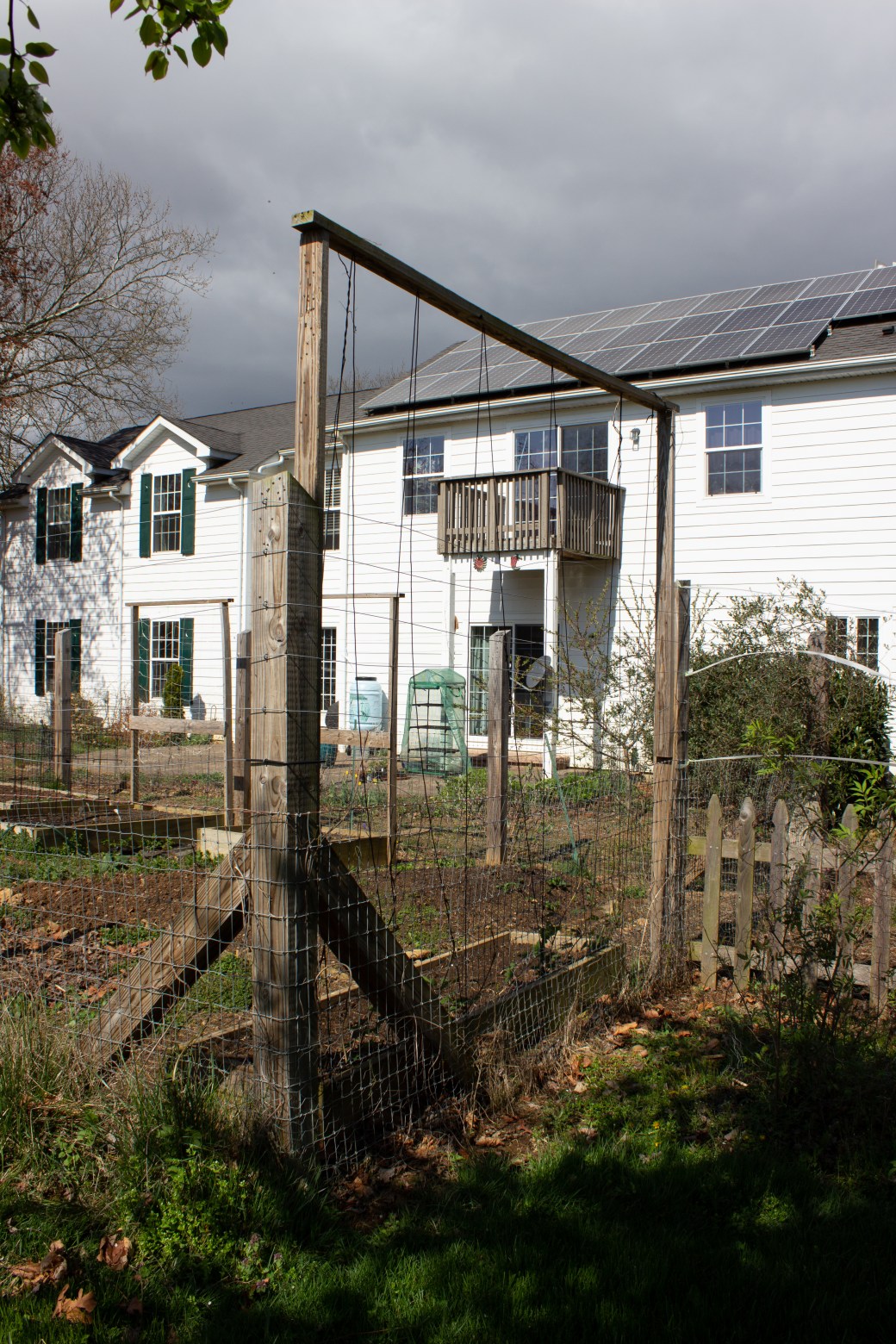 Original hops trellis, attached to Ft. Knox fenceposts.
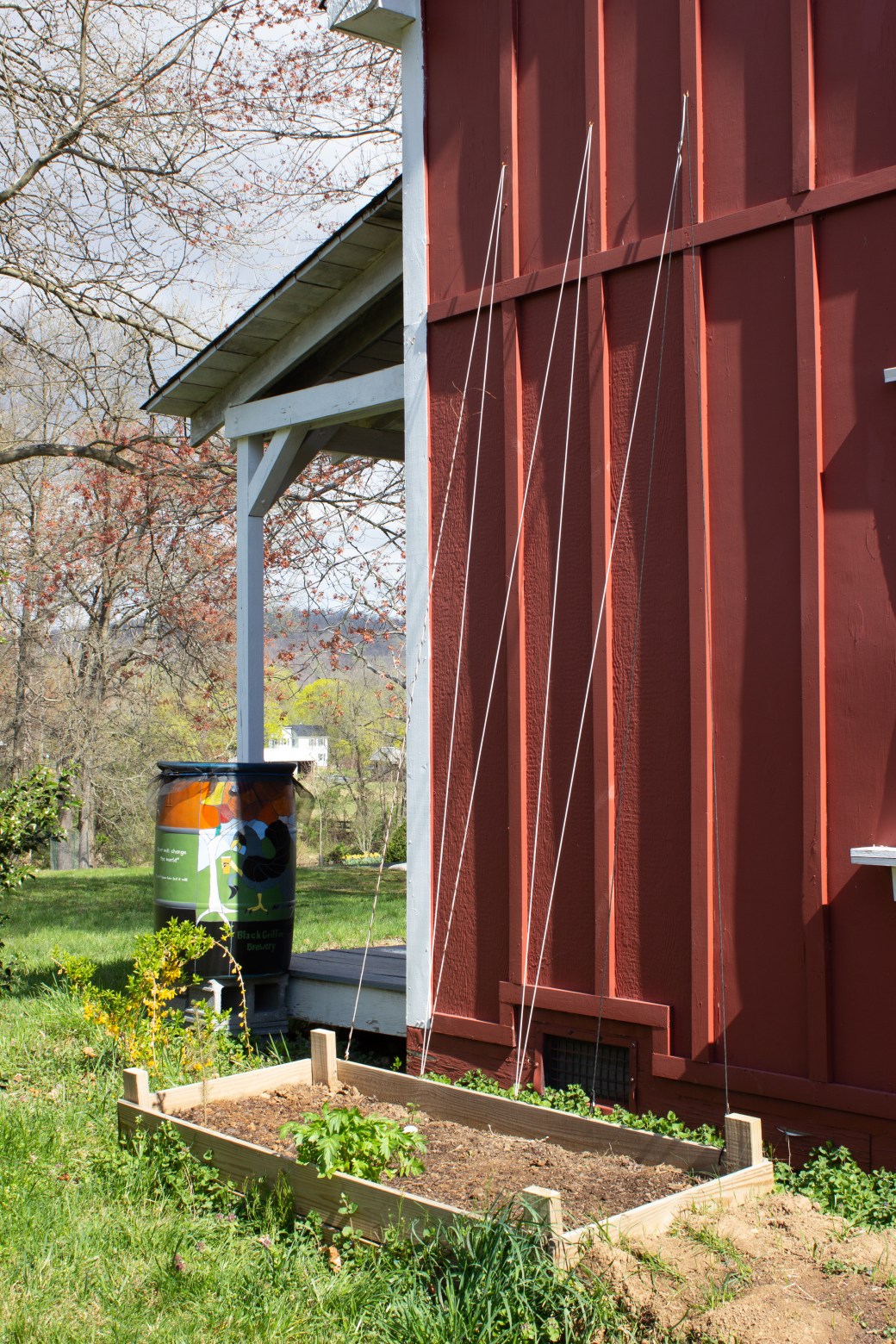 Hops bed next to cabin. You can see a Willamette shoot coming up just under the second string from the left.
The plant in front of the Willamette shoot is Valerian, an herb whose leaves, flowers and roots can be used as a mild sedative (including in a tea made of hops). It can also be added to beer. There seems to be a range of opinion about how it affects the beer. A book called “The Homebrewer’s Garden” says that it provides a “soothing flavor and pleasant scent.” A homebrewer commenting online said it smells like “dirty socks.” I haven’t tried it yet, but I guess I’ll have to since it’s there.


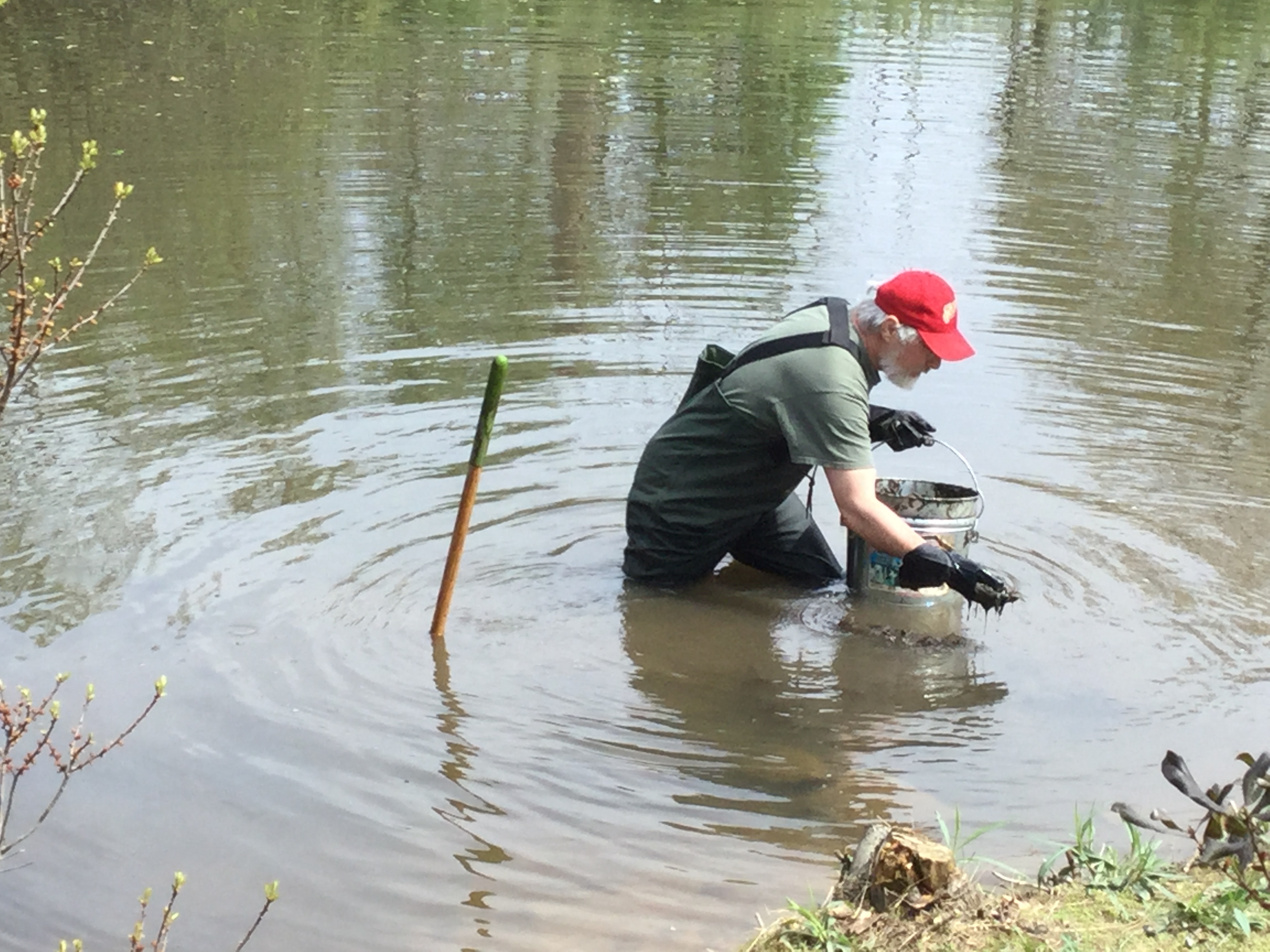
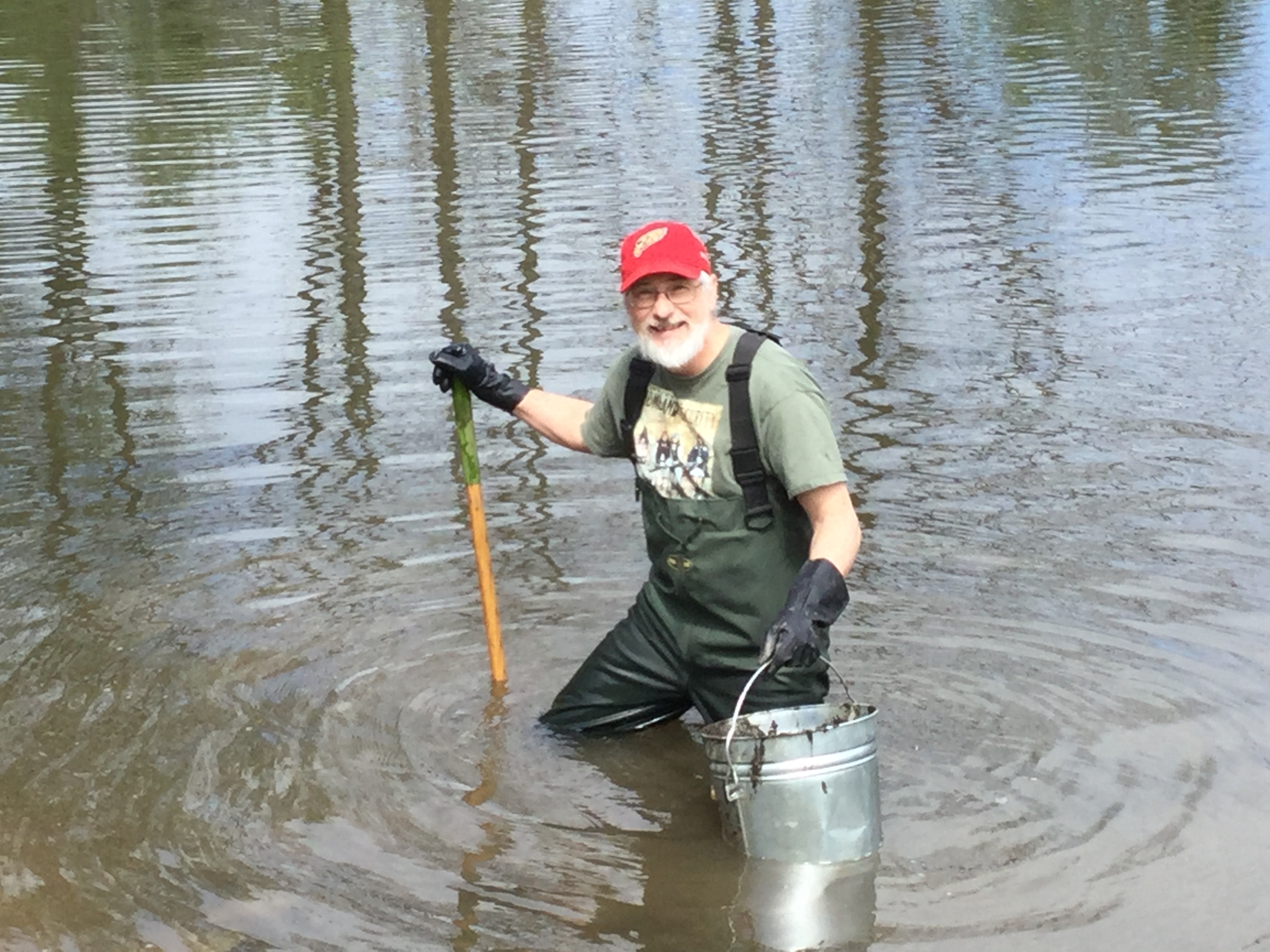
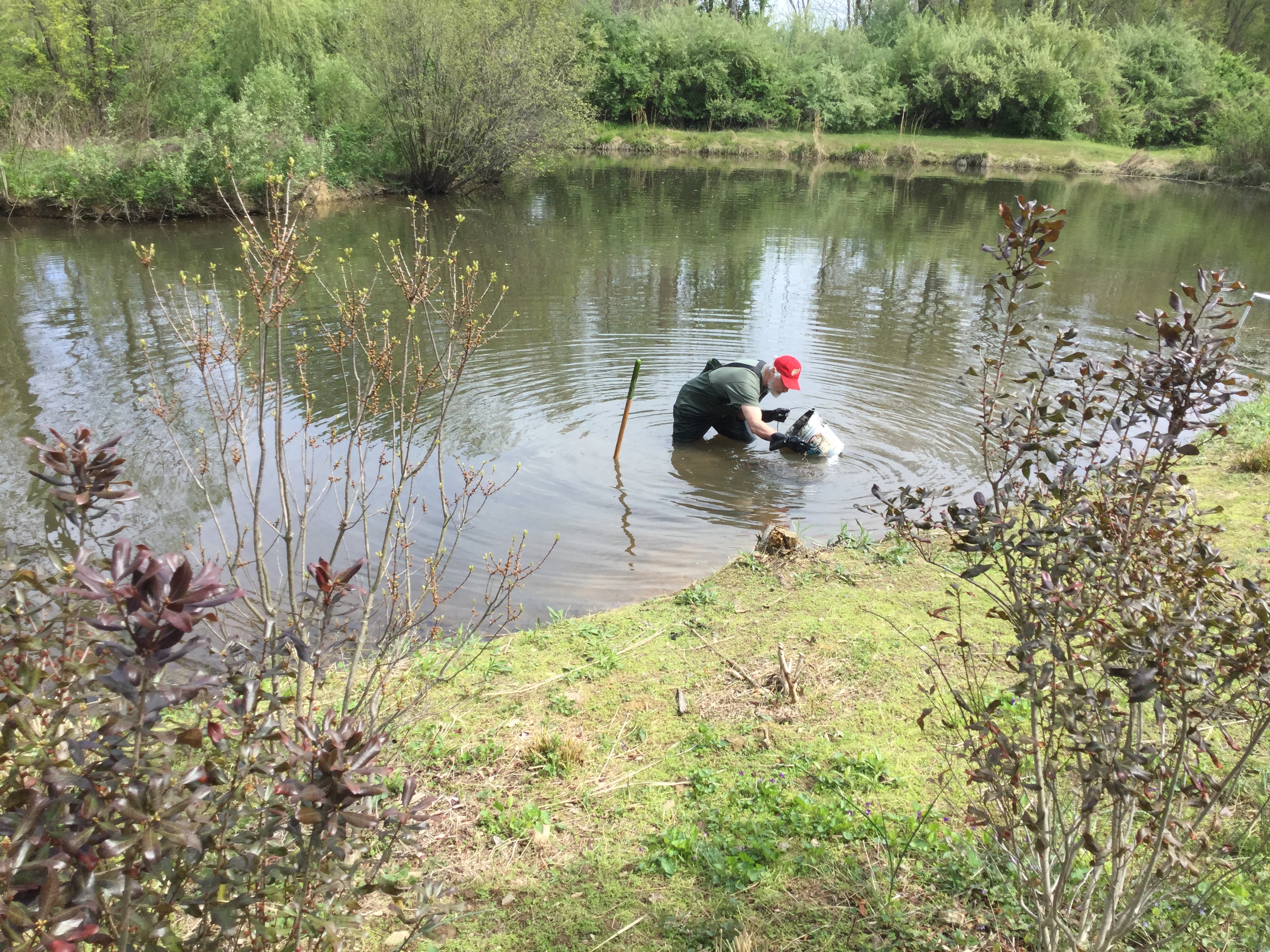
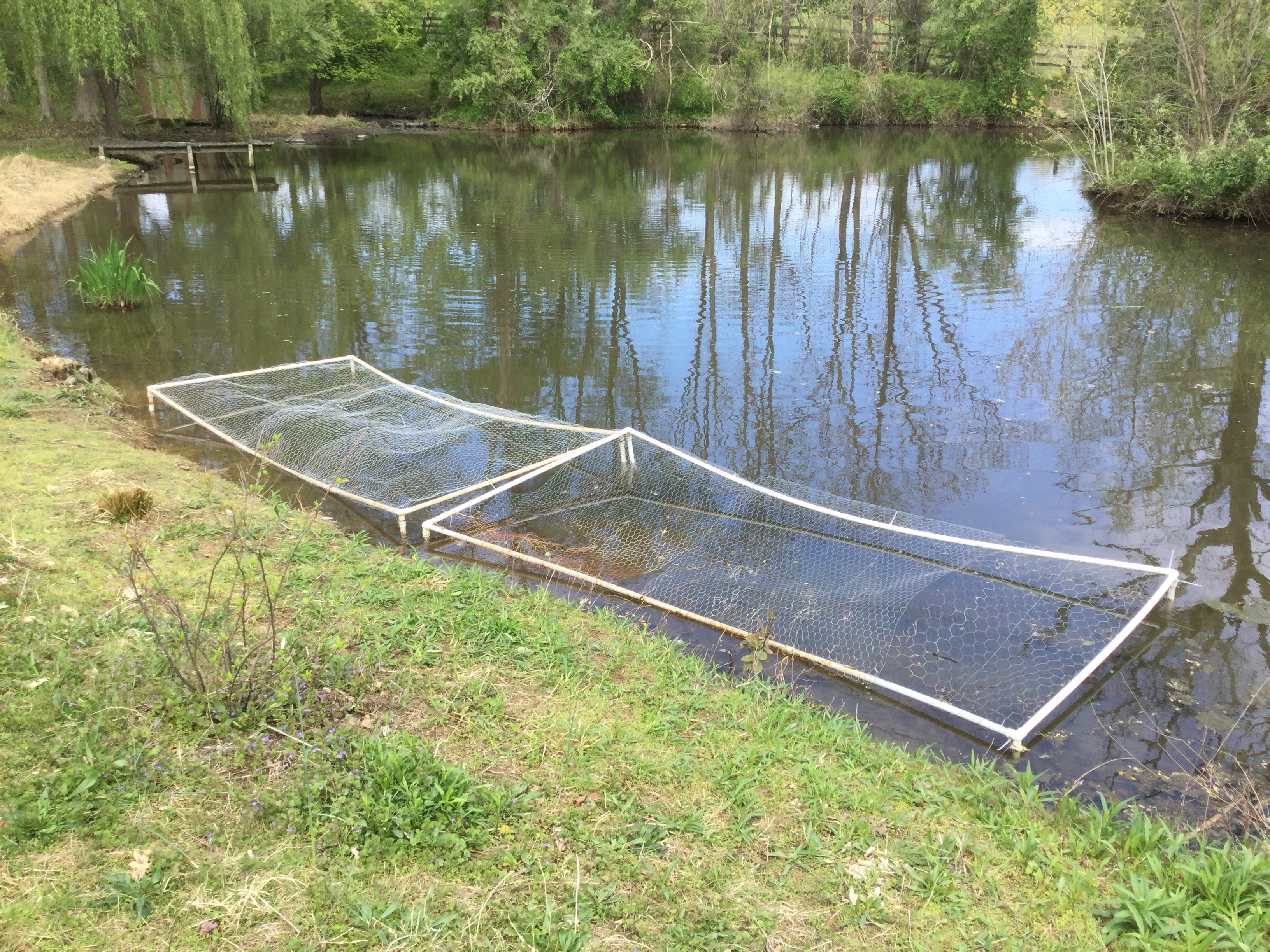
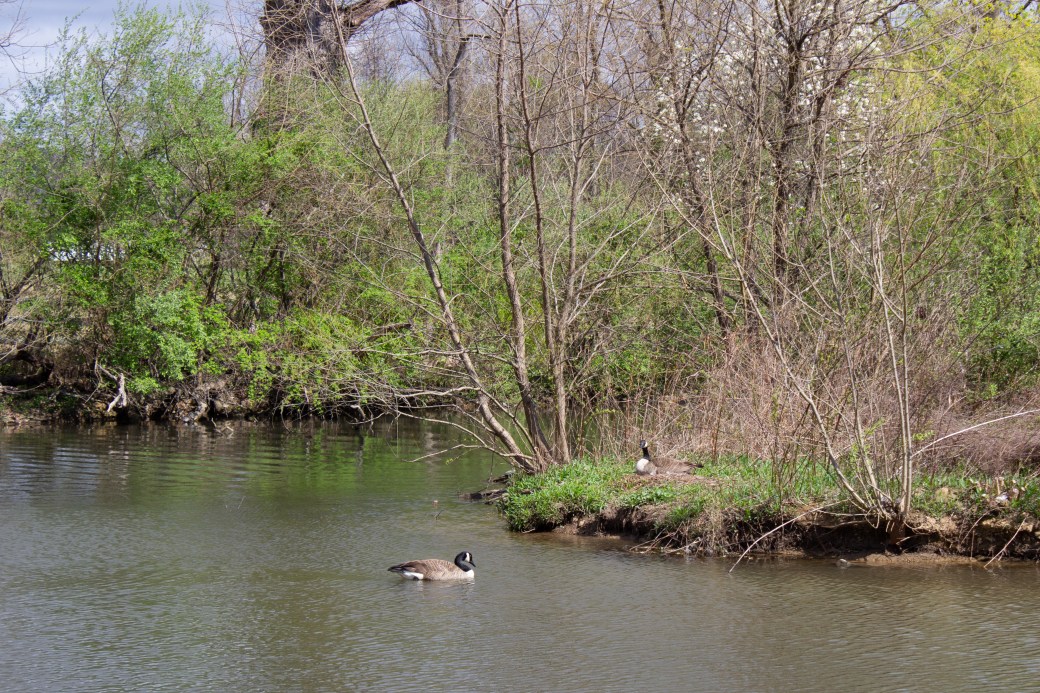 If the native Americans didn’t call March the “moon of the annoyingly loud honking geese,” it beats me why not. The first year we moved to Kidwell, there were at least sixty Canada geese and goslings parading around on the lawn in front of the pond, making a crazy racket all day and night. So we are engaged in a long-term war with the geese.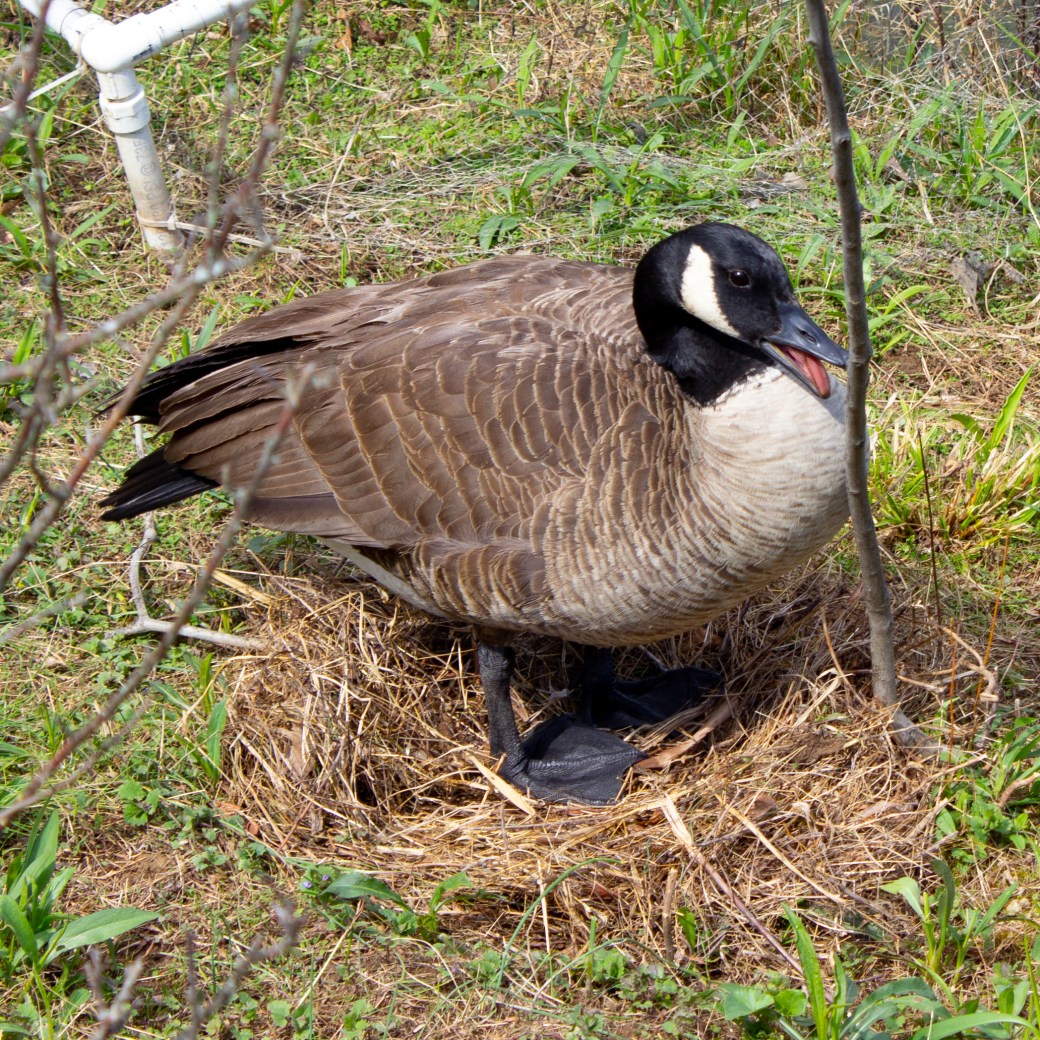


 Kidwell Garden